Stats
Actions
Available In
Tags
Quality gates for AI-assisted codebases — catch the slop LLMs leave behind. Provides refit onboarding, the swab/scour/buff/sail remediation loop, and barnacle friction reporting as a Claude skill and slash commands.
Use when `sm` itself gives invalid guidance, blocks valid work, produces
Triage CI results and review feedback for a pull request.
Run when you find a repo with `sm` installed but no `.sb_config.json` — or
Run slop-mop's one-time onboarding remediation rail for this repository.
Drive the workflow toward a green, buffed PR — one step at a time.
Own this plugin?
Verify ownership to unlock analytics, metadata editing, and a verified badge. GitHub access is read-only (username + org membership).
Sign in to claimOwn this plugin?
Verify ownership to unlock analytics, metadata editing, and a verified badge. GitHub access is read-only (username + org membership).
Sign in to claimBased on adoption, maintenance, documentation, and repository signals. Not a security audit or endorsement.







Slop-mop is a longitudinal force multiplier for humans building with AI. It optimizes repositories toward long-term maintainability and overall throughput in three ways:
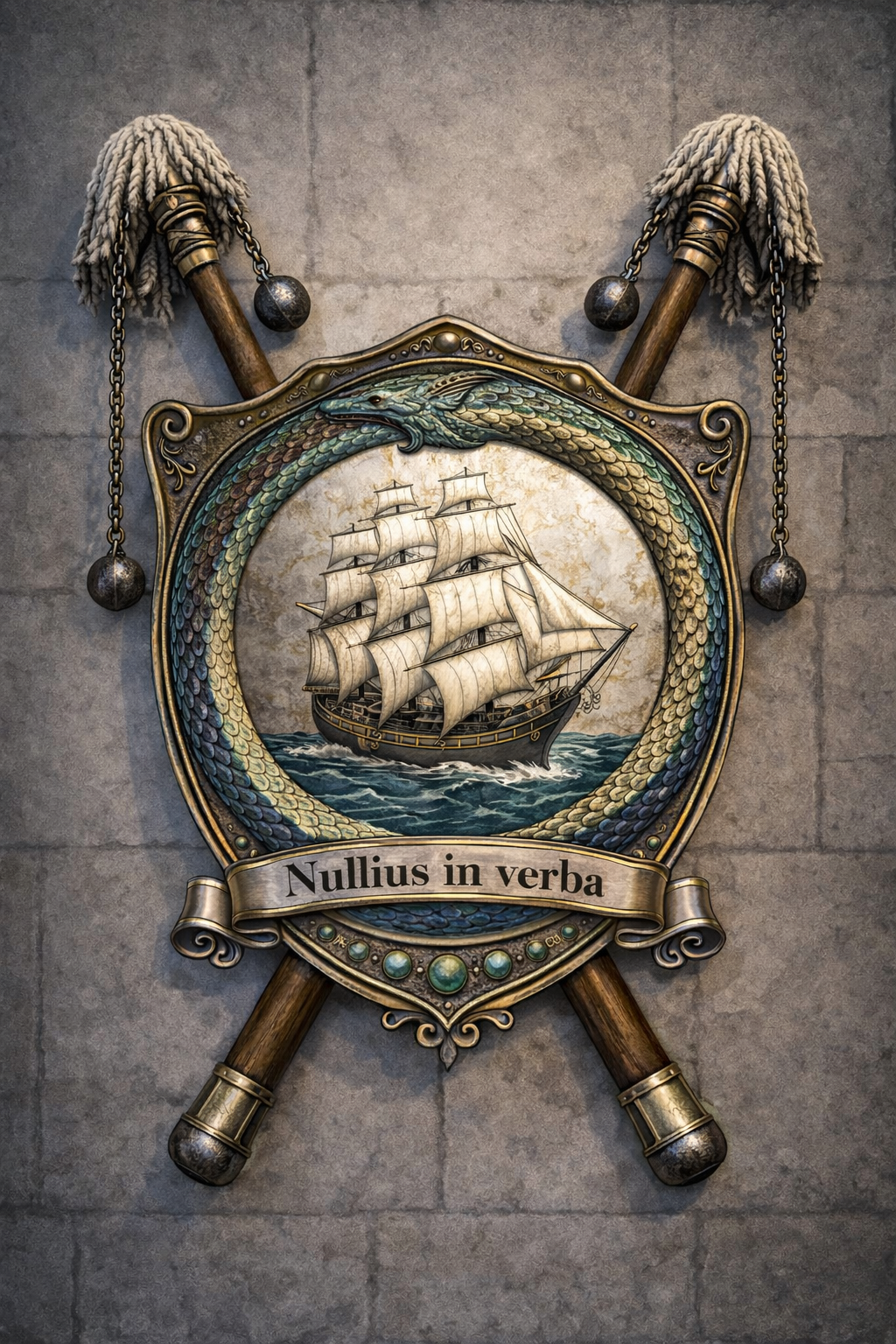
Coding agents optimize for apparent completion — the nearest green checkmark,
not the right one. They act like balls rolling downhill, and left to their own
momentum they settle in the shallowest local minimum: untested claims, coverage
gamed by a true is true, a silenced gate, a git commit --no-verify. The code
runs. The PR looks clean. The slop is already in — junk DNA that threatens the
code's offspring down the line.
Slop-mop keeps the rule outside the loop. Your standards live in external gates, not inside the agent's reward function, so they hold even when reward pressure is high — and following the rail becomes the shortest path to the reward instead of a wall to climb. Refit carves the initial terrain, swab/scour/buff keep the gradient pointed at maintainable code, and wake-angry-drunk-captain blocks fake progress when only a human can break the tie.
The verbs are deliberately nautical — swab, scour, buff, sail,
barnacle. Novel tokens from naval practice don't come with a million training
examples of how to weasel around them, which helps keep models out of dangerous
eddies.
This is harm reduction, not prevention. A determined model will still find a seam when the reward pressure is high enough; the honest claim is narrower — more catches than misses, over time. That is enough to keep a codebase navigable. It is purposefully opinionated, because structure begets adherence to best practices.
Install it and set up a repo (omit [all] for the framework only — gates whose
tools like black, pyright, or pytest are missing will say so):
pipx install slopmop[all]
sm init
Inherited an existing codebase? Run refit first — it builds a remediation plan and walks you gate-by-gate until the repo is clean enough for the daily loop:
sm refit --start
sm refit --iterate
sm refit --finish
Then it's just the loop: sm swab while you work, sm scour before a PR,
sm buff after CI or review feedback lands. Not sure what's next? sm sail
reads the workflow state and runs the right verb. See The Loop for
the full table, or Baselines if you need to defer the cleanup.
Slop-mop ships as a Claude plugin: a skill that auto-triggers on remediation
prompts, plus eight slash commands (/sm-init, /sm-refit, /sm-sail,
/sm-swab, /sm-scour, /sm-buff, /sm-barnacle,
/sm-wake-angry-drunk-captain). Install once and sm is available in every
repo — no per-repo sm agent install required.

In Claude Code or Cowork:
/plugin marketplace add ScienceIsNeato/slop-mop
/plugin install slopmop
npx claudepluginhub scienceisneato/slop-mop --plugin slopmopComprehensive skill pack with 66 specialized skills for full-stack developers: 12 language experts (Python, TypeScript, Go, Rust, C++, Swift, Kotlin, C#, PHP, Java, SQL, JavaScript), 10 backend frameworks, 6 frontend/mobile, plus infrastructure, DevOps, security, and testing. Features progressive disclosure architecture for 50% faster loading.
 Jeffallan
Develop, test, build, and deploy Godot 4.x games with Claude Code. Includes GdUnit4 testing, web/desktop exports, CI/CD pipelines, and deployment to Vercel/GitHub Pages/itch.io.
 Randroids-Dojo
Comprehensive feature development workflow with specialized agents for codebase exploration, architecture design, and quality review
 anthropics
Access thousands of AI prompts and skills directly in your AI coding assistant. Search prompts, discover skills, save your own, and improve prompts with AI.
 f
fComprehensive PR review agents specializing in comments, tests, error handling, type design, code quality, and code simplification
anthropicsA growing collection of Claude-compatible academic workflow bundles. Covers scientific figures, manuscript writing and polishing, reviewer assessment, citation retrieval, data availability, paper reading, literature search, response letters, paper-to-PPTX conversion, and evidence-grounded Chinese invention patent drafting. Rules are organized as reusable skill folders with explicit workflows and quality checks.
 Yuan1z0825